

Lesley McInally’s ceramics explore the relationship between natural landscapes and ancient, abandoned stone structures that have been transformed over time by elemental forces and generations of human contact.
-
Lesley McInally’s ceramics explore the relationship between natural landscapes and ancient, abandoned stone structures that have been transformed over time by elemental forces and generations of human contact.
The archaeological sites of Neolithic chambers and monuments found in the Orkney Islands have had a particularly profound impact on Lesley’s ceramic career. During her study and exploration of the island’s landscape, Lesley became increasingly intrigued by the historical graffiti encapsulated within and on these monuments; it was evident to her that each layer was part of a continuous journey.
This aspect of historical narrative has impacted her most recent body of work. To convey her ideas, Lesley developed a method of multi-layered surface techniques using paper clay, ceramic pigments, coloured porcelain engobes, and glazes. She recognises that clay has a memory, and therein, each mark made is never lost. Lesley builds up layers and reworks the surface over time to create a diary in itself. A historical narrative on clay, a palimpsest. -
In February 2017, Lesley McInally was awarded the Craft Individual Grant from the Ontario Arts Council, Canada.
Works
For artworks and all other enquiries, please use the enquiry form below.


The artworks below are available for purchase online — click on the image to view more details.


Enquire
To see this artist's full collection catalogue, and for all other enquiries
Features

You may also like


2022 Series
by Lesley McInally
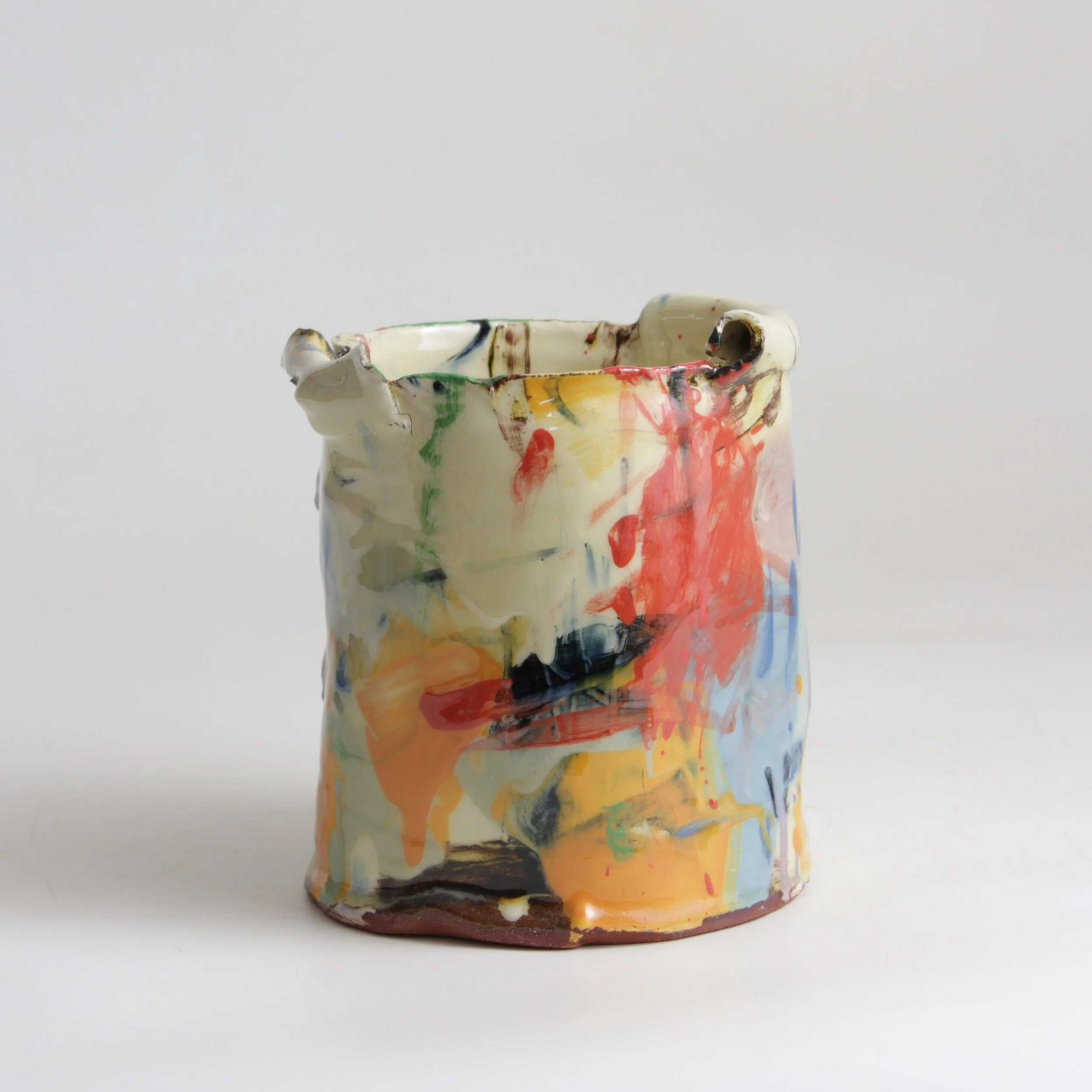
In an examination of the relationship between history and the weathering landscape, and inspired by archaeological sites featuring Neolithic graffiti, Lesley McInally’s ceramic vessels are vibrant and dynamic. Layers of pigment are worked into the surface of her ceramics over a period of time to create narrative.
Click on the image to see more
Ceramic
11h x 14w cm